Finding Your Flow: The Best Notebooks for Writing from LeStallion
I have a confession: I own a stack of half-used notebooks that would shame a stationery hoarder. Moleskines with three pages written in, field notes pads that saw a single grocery list, and spiral-bound things that fell apart before they ever saw a complete sentence. It took me years to realize the problem was not my lack of discipline. It was the notebook itself.
When a notebook does not match how you actually think and write, it fights you. The pages feel wrong, the binding gets in the way, and the whole experience becomes a chore rather than a release. That is why I started paying attention to what makes a notebook work for real writing, not just for looking good on a desk. And that search eventually led me to the Best notebooks for writing from LeStallion.
What Makes a Notebook Right for Writing?
Before we get into specific options, it helps to understand the qualities that separate a useful tool from a pretty object. For daily writing, three things matter most: paper feel, page layout, and durability.
Paper feel is personal, but it is also non-negotiable. Some writers need a smooth, almost slippery surface that lets a fountain pen glide. Others want a toothy texture that grips pencil lead. I land somewhere in the middle, preferring a paper that takes ink without bleeding but has enough grain to slow my hand just a little. That small resistance keeps my handwriting legible and my thoughts from racing ahead of my pen.
Page layout matters because it shapes how you use the space. A blank page gives total freedom but can feel paralyzing. Ruled lines keep you straight but sometimes push you into writing more than you meant to. Dot grid is the compromise that works for many people, offering structure without demanding you fill every line. LeStallion uses a thoughtful dot-grid layout in most of its notebooks, which I have come to appreciate for both writing and light sketching.
Durability is the thing people overlook until their notebook falls apart mid-project. A good notebook should lie flat when open, survive being thrown into a bag, and keep its spine intact after months of use. The binding on LeStallion notebooks is sewn, not glued, which means they open flat and stay open without you having to crack the spine. That is a small detail that makes a big difference when you are writing for an hour at a stretch.
Why the LeStallion Approach Works
LeStallion positions itself as a journal that actually inspires your productivity. That might sound like marketing fluff, but after using their notebooks for several months, I think the claim holds weight. The design choices are intentional, not decorative.
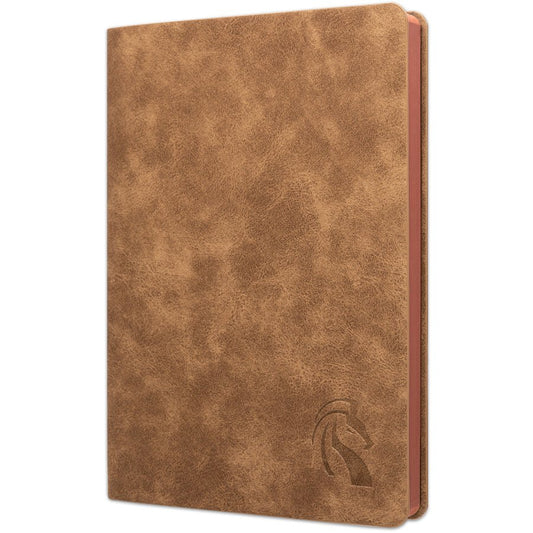
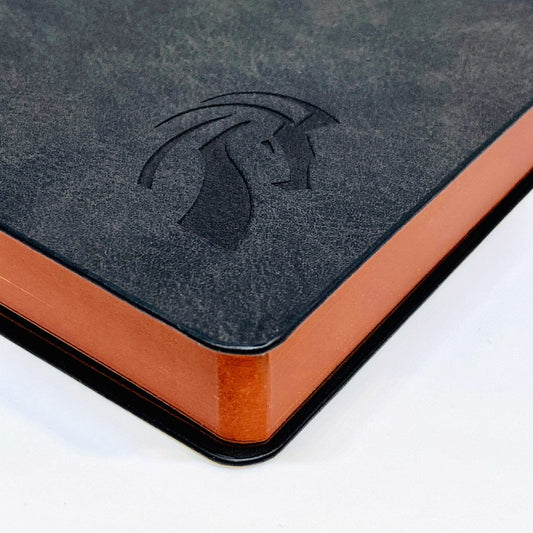
Take the cover material. It is a soft-touch leatherette that feels substantial without being stiff. It bends with your hand, which means you can hold the notebook in one palm and write with the other, no desk required. That might seem minor, but if you write on a train, in a coffee shop, or standing in a hallway between meetings, that flexibility matters.
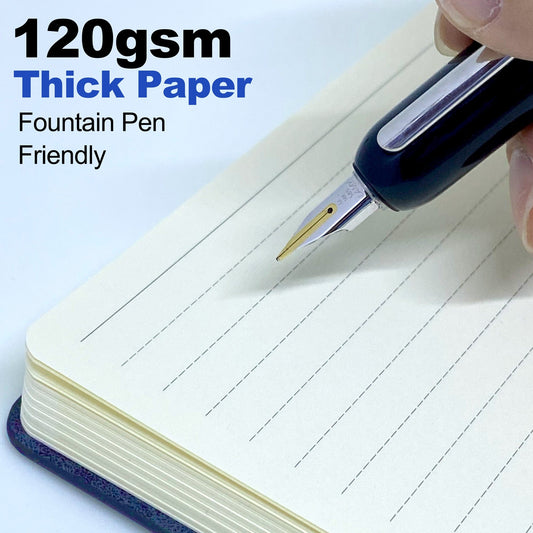
The paper is 120 GSM, which is thick enough to handle fountain pen ink, gel pens, and even occasional water-based markers without ghosting or bleeding through. I tested it with a Lamy Safari fine nib and a Pilot G2 0.38, and both came out clean on the other side. For writers who use mixed media or who just hate seeing ink shadow through the page, that thickness is a real selling point.
The Best notebooks for writing from LeStallion also include an elastic closure band instead of a ribbon or no closure at all. That band keeps the notebook shut in your bag and doubles as a page holder when you are working. It is a small feature, but once you get used to it, you miss it on other notebooks.
How to Choose Your Notebook Size
One mistake I see often is buying a notebook that is either too big to carry or too small to write in comfortably. LeStallion offers two main sizes: A5 and B5. Both are practical, but they serve different needs.
A5 is the sweet spot for portability. It fits in most bags and even some large jacket pockets. If you write on the go, take notes in meetings, or do most of your writing in short bursts, go with A5. It gives you enough room for a page of prose or a detailed to-do list without feeling cramped.
B5 is better for longer writing sessions. It gives you roughly 50 percent more surface area per page, which matters if you are working through a complex idea or drafting something that needs room for margin notes. I use B5 for my morning pages and longer journal entries. The extra space lets my thoughts spread out, and I find I write more because I am not constantly flipping pages.
Neither size is wrong. The right choice depends on where and how you write. If you can, try both for a week and see which one you reach for more often.
Practical Writing Habits That Stick
A good notebook does nothing on its own. You still have to show up and write. But the right notebook makes showing up easier. Here are a few habits I have built around using a quality journal that actually inspires your productivity.
- Write the date and a one-sentence intention at the top of every new page. It takes ten seconds and gives each entry a sense of purpose.
- Keep your notebook and pen in the same place every day. I keep mine on the corner of my desk, always open to the current page. That visual cue reminds me to write, even when I am busy.
- Do not edit as you go. The notebook is for getting ideas out, not polishing them. Cross things out if you must, but keep moving forward.
These small practices, combined with a notebook that does not fight you, create a loop that builds momentum. The more you write, the more you want to write. The notebook becomes a tool you trust, not a thing you feel guilty about ignoring.
What You Give Up and What You Gain
No notebook is perfect for everyone. LeStallion notebooks are not cheap, though they are priced similarly to other premium journals. You are paying for the paper quality, the binding, and the design thought that goes into each one. If you are the kind of writer who burns through a notebook every two weeks, that cost might feel high. But if you write more deliberately and want a notebook that lasts, the investment pays off.
You also give up the flexibility of loose-leaf systems. Some writers prefer binders or disc-bound notebooks that let you rearrange pages. LeStallion notebooks are bound, which means you cannot move pages around. For me, that is a feature, not a limitation. It forces me to commit to the order of my thoughts and accept that writing is a process, not a filing system.
What you gain is a focused, distraction-free writing experience. The notebook does not have tabs, pockets, or built-in calendars competing for your attention. It is a blank space with just enough structure to guide your hand. That simplicity is rare, and it is exactly what many writers need.
After testing several notebooks over the past year, I keep coming back to the Best notebooks for writing from LeStallion. They are not flashy. They do not shout for attention. They just work, page after page, and that is the highest compliment I can give a writing tool.
Final Thoughts
If you are serious about writing, the notebook you use matters more than most people think. It is the interface between your mind and the page. When that interface is smooth, writing feels natural. When it fights you, writing feels like work.
LeStallion notebooks are built for people who actually write, not for people who want a beautiful object on their shelf. The paper, the binding, the size options, the closure band, all of it serves the act of writing. That is why, when someone asks me what to buy, I point them toward the Best notebooks for writing from LeStallion.
Try one. Write in it every day for two weeks. See if your habits change. Mine did.